QDA Sensory Analysis: Understanding Your Product’s Sensory Profile
Developing a food or beverage product is not only about whether consumers like it. Product developers also need to understand what the product is like, how its sensory characteristics differ from other formulations, and which attributes may need improvement.
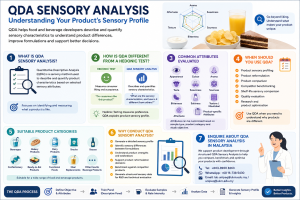
Quantitative Descriptive Analysis (QDA) helps food companies, SMEs, researchers, and product developers describe and quantify the sensory profile of food and beverage products using a structured sensory evaluation approach.
What is QDA Sensory Analysis?
Quantitative Descriptive Analysis (QDA) is a sensory evaluation method used to describe and quantify product characteristics based on selected sensory attributes.
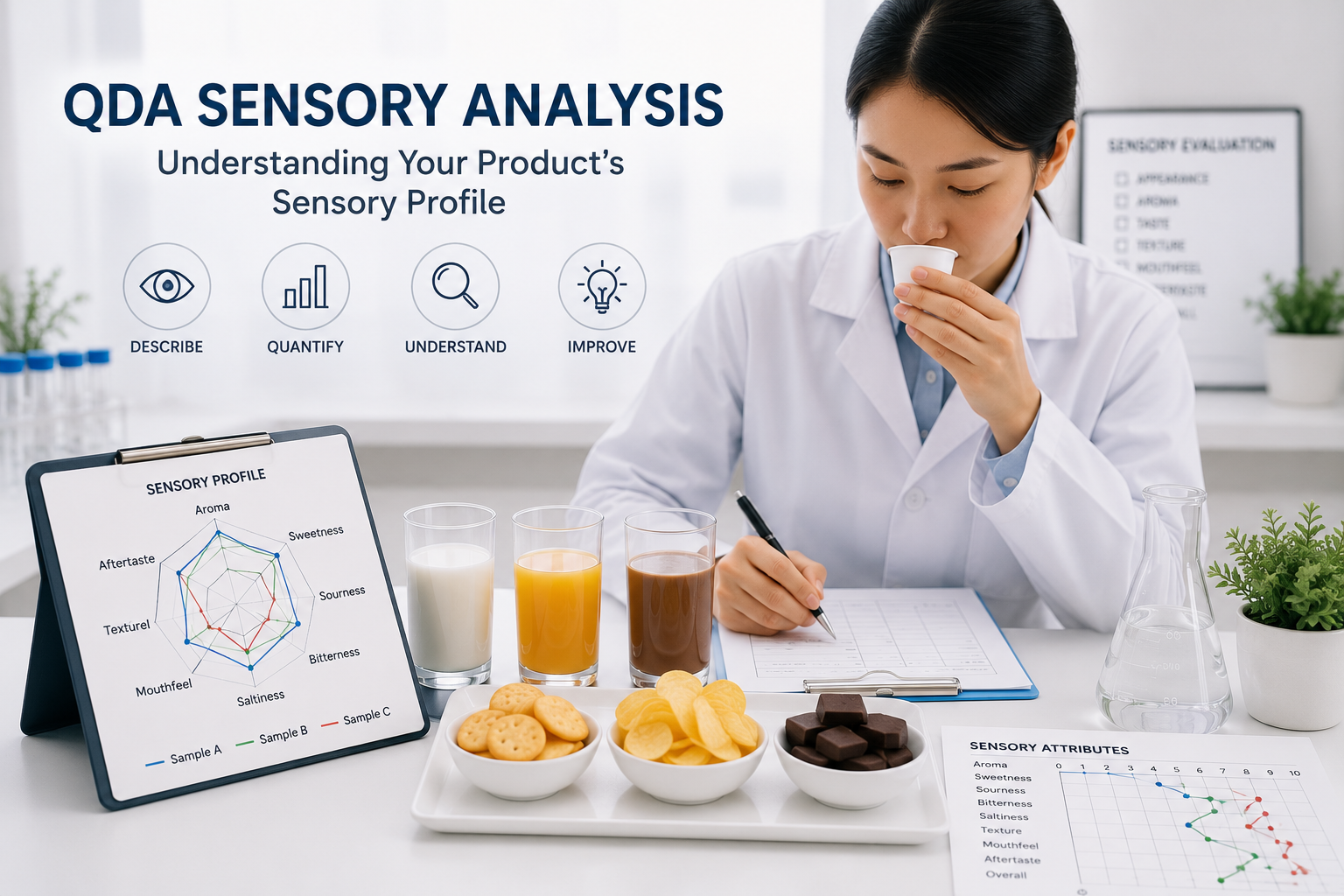
Instead of only measuring whether a product is liked or disliked, QDA focuses on identifying the sensory characteristics of the product, such as aroma intensity, sweetness, sourness, bitterness, texture, mouthfeel, aftertaste, and other product-specific attributes.
QDA is useful when companies need a more detailed understanding of product differences and sensory performance.
How is QDA Different from a Hedonic Test?
A Hedonic Test measures consumer liking and acceptance. It helps answer the question:
“Do consumers like this product?”
QDA describes and quantifies sensory characteristics. It helps answer the question:
“What are the sensory characteristics of this product, and how is it different from other products or formulations?”
In simple terms:
Hedonic Testing measures preference. QDA explains product sensory profile.
Common Attributes Evaluated
Common attributes may include:
- Appearance
- Colour
- Aroma
- Taste
- Sweetness
- Sourness
- Bitterness
- Saltiness
- Texture or mouthfeel
- Aftertaste
- Product-specific sensory attributes
The attributes evaluated can be customised depending on the sample type, product category, and study objective.
When Should You Use QDA?
QDA is suitable for:
- Product sensory profiling
- Product reformulation
- Product comparison
- Competitor benchmarking
- Shelf-life sensory comparison
- Quality evaluation
- Research and product optimisation
It is especially useful when companies need to understand why products are different, not only which product is preferred.
Suitable Product Categories
QDA Sensory Analysis is suitable for many food and beverage products, including beverages, bakery products, dairy products, snacks, sauces, confectionery, ready-to-eat products, functional foods, meal replacements, and other food and beverage products.
Why Conduct QDA Sensory Analysis?
QDA Sensory Analysis can help companies:
- Generate a detailed sensory profile
- Identify sensory differences between formulations
- Understand product strengths and weaknesses
- Support product reformulation decisions
- Benchmark against competitor products
- Generate structured sensory data for R&D and technical evaluation
Enquire About QDA Sensory Analysis in Malaysia
If you are developing a new product, comparing formulations, benchmarking against competitor products, or conducting product optimisation, UNIPEQ can support your product development through structured QDA Sensory Analysis.